Surprising fact: more than 40% of individual transactions on peer-to-peer platforms place the burden of safety squarely on users, not platforms.
This guide defines crypto p2p trading seller protection in practical terms: the controls, platform features, and seller actions that reduce the risk of loss when converting digital assets to fiat.
On peer-led marketplaces, the key issues for the seller are release timing, payment verification, and keeping clear evidence. Sellers gain flexibility on price and payment methods, but they also accept more responsibility for due diligence and documentation.
In the UAE context many transactions use bank transfers or local payment rails. That means confirming cleared funds in your own bank is essential before releasing any tokens.
What follows will cover safe platform selection, pre-trade screening, professional payment checks, current scam patterns, red flags, and dispute recovery steps—a compact, repeatable checklist sellers and users can apply to every transaction.
Key Takeaways
- Seller-side safety relies on timing, verification, and documentation.
- Use reputable platforms and confirm cleared bank funds in the UAE.
- Escrow, two-factor authentication, and clear evidence cut scam exposure.
- Expect flexibility in payment methods—but perform strict due diligence.
- The guide provides a repeatable checklist for spotting red flags and resolving disputes.
Why Seller Risk Is Higher in P2P Crypto Transactions
When two users agree a deal, the timing of the asset release becomes the critical point of risk. That single action—releasing crypto—often decides whether a transaction completes safely or becomes a loss.
How the flow works
An order is created with terms. The platform may hold the coin in escrow while the buyer sends a payment to the counterparty.
The seller must verify the funds have truly cleared before releasing crypto. Release timing is the main control a seller has to avoid losses.
Where exposure happens
Common failures: disputed payments, forged receipts, and moving communications off-platform. Screenshots and SMS messages can be edited and are not reliable proof.
Off-platform chats erase the record the marketplace could use in a dispute, giving scammers room to claim refunds or reversals.
| Vulnerability | What it looks like | Immediate risk | Basic mitigation |
|---|---|---|---|
| Forged receipt | Edited screenshot of bank notice | Releasing funds prematurely | Confirm cleared funds in own bank |
| Payment dispute | Chargeback or reversal | Loss after release | Wait for settlement, not notification |
| Off-platform chat | Telegram/WhatsApp messages | Weakened dispute evidence | Keep all communications inside the marketplace |
For a broader view of common risks and how platforms reduce them, read this P2P risk overview. The next section explains how platform design—KYC, escrow, and support—reduces these exposures.
Choose a P2P Platform Built for Safety and Support
A platform’s design choices shape how well users can verify payments and manage disputes. Sellers should prefer marketplaces that bundle clear controls, prompt support, and account-level security.

Escrow services and why they matter before releasing funds
Escrow reduces immediate risk by holding the asset while payment clears. Treat escrow as necessary but not sufficient: always confirm cleared bank account settlement in your own bank before release.
Identity verification and matching payment names
Identity verification that links a verified profile to a payer’s bank account increases traceability. Platforms that require name matching raise the cost for scammers and improve recoverability in disputes.
Risk controls that flag suspicious activity
Reputable platforms run automated checks, restrict new accounts, and block repeat offenders. These risk controls help spot unusual patterns and limit scam attempts before they reach users.
Customer support and dispute resolution workflows
Reliable customer support offers clear evidence rules, defined escalation timelines, and transparent dispute steps. Predictable workflows let sellers plan responses and collect the right documentation.
Account security basics
Enable 2FA, set unique anti-phishing codes, and monitor account activity daily. Note: some marketplaces—Bybit among them—explicitly state they do not hold fiat or crypto for users, so confirm what is actually escrowed before assuming the platform holds payment.
“Verify the platform’s escrow model and support timelines before accepting competitive offers that rely on off-platform messaging.”
crypto p2p trading seller protection Checklist Before You Accept an Order
A one-minute pre-trade review can stop common scams and save time during dispute handling.
Start by screening the counterparty: check completion rate, trading history, and feedback patterns. A completion rate under 80% or sparse history raises uncertainty. Read comments for repeated complaints or refunds.
Quick ad review
Scrutinize the ad for price gaps, unusually high limits, or payment methods that often reverse. Large deviations from market price signal possible scams or impatience from the buyer.
Communication rules
Keep all communications inside the platform order chat. This preserves logs that a customer support team can use in a dispute.
Non-negotiables
Refuse third-party payments, last-minute name changes, and requests for extra personal information beyond platform requirements. In the UAE, ensure the bank account name matches the verified counterparty to reduce wrong-transfer claims.
“Pause and contact platform support if anything feels inconsistent—do not let pressure force an early release.”
| Check | Why it matters | Action |
|---|---|---|
| Completion rate & history | Shows consistency and reliability | Decline or verify further if |
| Ad terms | Price gaps and limits reveal risk | Reject offers far from market or with odd payment methods |
| Communications | Preserves dispute evidence | Keep messages on-platform only |
| Payment rules | Third-party payments increase reversals | Insist on payer and bank account name match |
Verify Payment Like a Pro Before You Release Crypto
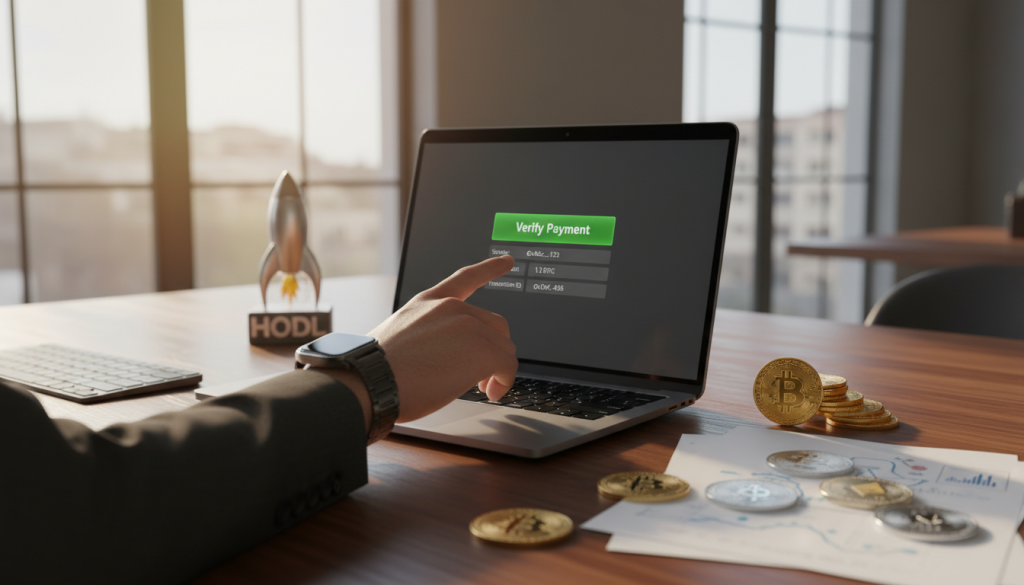
Never trust a message or screenshot alone—verify funds where they land before you act. Sellers must treat the receiving ledger—your bank or wallet balance—as the only reliable confirmation of a completed payment.
Cleared funds vs. “proof”
Define cleared funds: money is visible and available in the receiving bank or wallet — not pending or shown only in a notification.
Screenshots and SMS alerts can be edited or delayed. They do not replace a ledger check and should never trigger a release.
Bank account checks that reduce reversal claims
Before releasing crypto, confirm the payer name matches the verified buyer, verify the exact amount, and check reference fields for order IDs.
Prefer transfer methods that are traceable and resist chargebacks. Some payment rails carry higher reversal risk; choose those with clear settlement records.
Handling “paid” status pressure
Order status or chat claims are not proof. If a buyer applies urgency or threats, use this scripted reply: “I will release after I confirm cleared funds in my bank/wallet.”
Follow the rule: verify, document, then release crypto. Document the ledger entry and transaction reference to reduce future claims from scammers.
For more procedural guidance, see this best practices guide.
Common P2P Crypto Scams Sellers Face Right Now
Fraud patterns evolve fast, but most rely on the same psychological levers: urgency, confusion, and redirected communications.
Fake receipt and fake escrow scams — Scammers send forged bank screenshots or fake escrow confirmations to claim payment was sent. They may ask the seller to release assets before funds actually clear. Treat any screenshot as unreliable. Always verify settled funds in your own bank before releasing crypto.
Phishing and impersonation of support
Attackers impersonate platform support via emails or DMs, claiming the order needs immediate action. They may send fake ticket links. Only trust in-platform support channels and ticket IDs shown inside the marketplace.
Man-in-the-middle via messaging apps
MitM attacks begin on Telegram, WhatsApp, or social DMs offering “better rates.” Scammers redirect payments or capture credentials. Stop all off-platform contact and refuse payment changes.
Triangle (triangulation) scams
Scammers open multiple orders and reuse partial payments as false proof to force multiple releases. If payments are split across orders, pause and verify each cleared transaction separately.
Chargeback, check, and reversal tactics
Chargebacks and fake checks can reverse after an order closes. Banks in the UAE may take time to settle checks; avoid accepting checks and prefer traceable, settled transfers.
Cancellation and “mutual agreement” manipulation
Some frauds push sellers to cancel or accept “mutual agreement” after a disputed payment. This can finalize a release. Escalate to customer support and choose dispute options that preserve evidence rather than finalizing cancellation.
| Scam type | How it works | Immediate defense |
|---|---|---|
| Fake receipt / escrow | Forged screenshots claim funds or escrow release | Confirm cleared funds in your bank; keep chats on-platform |
| Phishing / impersonation | Fake support links or emails prompt release | Open support tickets only inside the platform |
| MitM via messaging apps | Redirect payments or harvest details off-platform | Refuse off-platform communication; verify payment ledger |
| Triangulation | Multiple orders used to pressure repeated releases | Verify each order separately; require full settlement |
| Chargebacks & checks | Reversals occur after apparent settlement | Avoid checks; wait for irreversible bank settlement |
Red Flags During Trader Interactions You Should Never Ignore
Certain actions during an order are consistent red flags that should prompt an immediate pause. These behaviours often predict a dispute or reversal and should be treated as decision triggers—not mere annoyances.
Requests to move payment or communications off-platform
Stop and refuse. Moving chat or payment off the marketplace removes logged evidence and prevents support from verifying context. If a counterparty pushes to use messaging apps or private transfers, keep the conversation on-platform and ask them to confirm there.
Last-minute changes to payment details or using a different bank account
Any sudden bank account change or new payer name is an immediate pause signal. Ask the buyer to update details inside the order and wait for the platform to record the change. Do not release assets until the revised payment clears in your own bank account.
Evasive behaviour, intimidation, or claims that selling is illegal
Pressure, threats, or claims that a sale is unlawful are manipulation tactics. Sellers should remain calm, preserve the chat log, and open a formal support ticket. Escalate rather than negotiate under duress.
Untraceable payment methods and inconsistent transaction information
Payments that lack a clear audit trail increase reversal risk. If amounts, references, or receipt details conflict with the order, treat this as high risk. Require traceable transfers and confirm ledger entries before acting.
Practical next steps when red flags appear:
- Do not release assets.
- Request clarification in the official order chat.
- Capture screenshots of the conversation and payment instructions.
- Open a dispute or contact support if pressure continues.
“Pause, verify, document, then proceed—preserve every record the platform can use to support your case.”
For a short procedural checklist and further reading, consult this beginners guide.
What to Do When a Dispute Happens: Evidence, Escalation, and Recovery
Disputes escalate quickly; early, clear records give platforms the evidence they need. Act fast. Collect proof while the order is live rather than trying to recreate events later.
Document everything
Capture contemporaneous evidence: screenshots of the order page, full in-platform chat logs, bank or wallet entries showing cleared transactions, and any receipts the counterparty provided.
Open a dispute with customer support
Start a formal dispute inside the platform. Summarize events in chronological order, attach evidence, and avoid side negotiations that contradict your record.
When to involve your bank
Contact your bank if a transfer is reversed, a chargeback appears, or you see suspicious incoming funds. Describe the payment as a transfer linked to a digital-assets sale and give the bank the transaction reference—do not speculate.
Post‑incident hardening
Block and report repeat offenders, change passwords, re-check 2FA, and review recent account activity. Monitor transactions and tighten account security to reduce repeat risk.
“Collect evidence in real time—platforms rely on records you preserve, not memories you reconstruct.”
Conclusion
A disciplined sequence—platform choice, counterparty screening, ledger verification, and careful release—keeps losses rare.
Playbook: choose a safety‑first platform, screen the counterparty, confirm cleared payment in your bank or wallet, and only then release assets for the order. Use escrow, KYC, and 2FA where available.
Most losses come from releasing based on screenshots or pressure rather than cleared funds. Maintain verification and document each transaction so customer support can act if needed.
Non‑negotiables: keep chats on‑platform, refuse third‑party payments, and pause on last‑minute changes. These rules stop common scams and deter scammers.
In the UAE context, disciplined execution preserves flexibility in p2p trading while giving sellers reliable outcomes.